

BRAKING IN DETAIL: Get to know World Superbike’s newest circuit as the field returns for more action in Hungary at Balaton Park
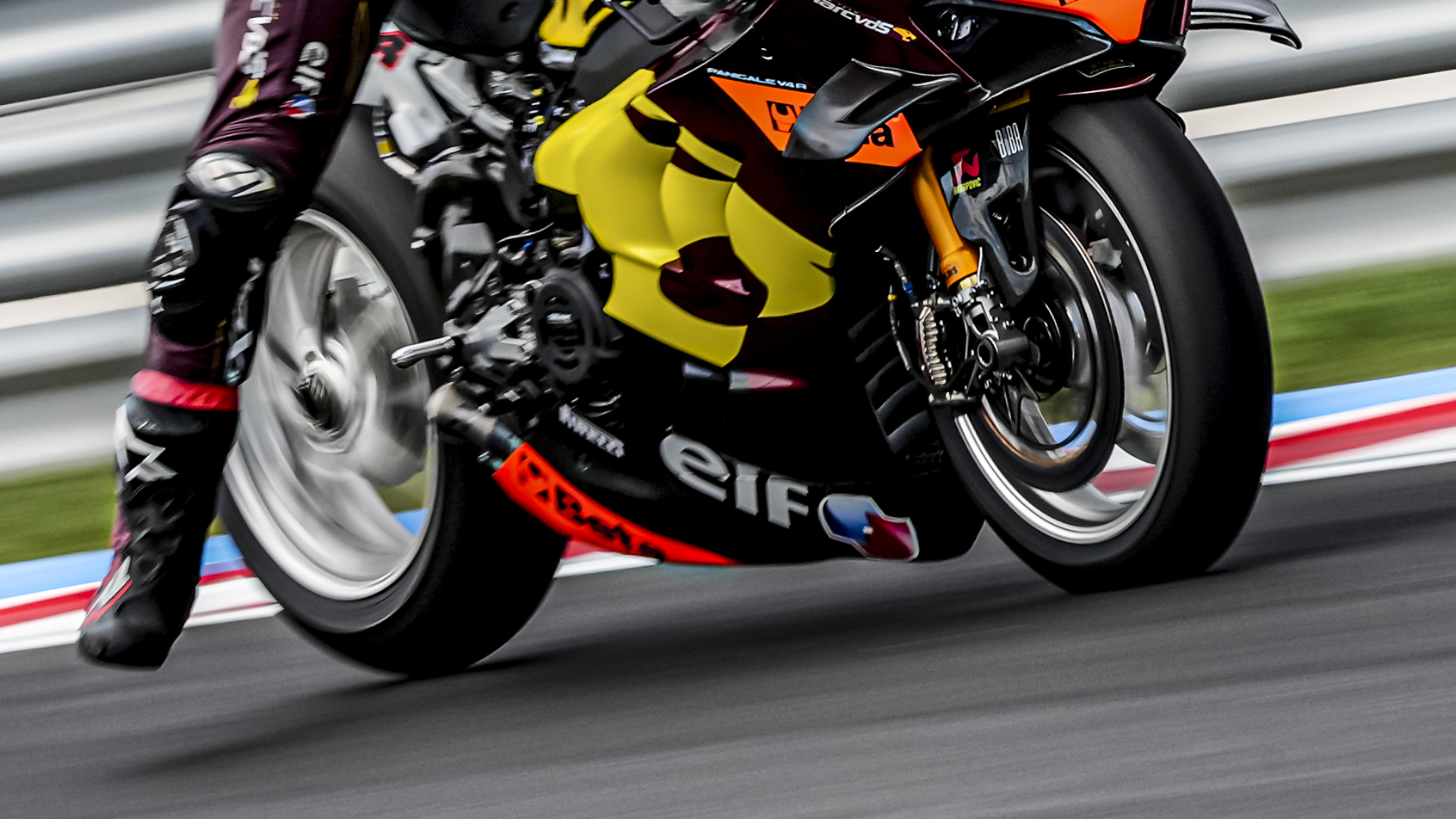

Brembo has provided cutting-edge data on the scenic track, providing exclusive insights about the 54th circuit to host a World Superbike round
After a stunning round of racing at the venue with the second-most MOTUL FIM Superbike World Championship races run, the field gets set for their arrival at the newest location on the calendar, the Motul Hungarian Round’s Balaton Park Circuit. After last season’s maiden trip to Balaton Park in what was the first round in Hungary since 1990, Friday, May 1st, will bring the opening day of action on track at Balaton Park in 2026. Last year, the venue hosted the honour of the 1000th WorldSBK race and a momentous hat trick from Toprak Razgatlioglu, while Sam Lowes (ELF Marc VDS Racing Team) earned his first ever WorldSBK podium double.
ON THE BRAKES AT BALATON: Brembo deems the circuit a four out of five in braking intensity
Brembo categorize the 4.075 km long Balaton Park Circuit as ‘highly demanding’ on the brakes. On a scale from one to five, it earned a difficulty rating of four due to nine braking sections per lap, totalling 29 seconds on the brakes. The track’s 17 corners are comprised of 10 left-handed turns and seven right-handed turns. Moreover, four braking sections are classified as high, one as medium, and 4 as light, but the overall load on the brake lever is not excessive: 720 kg from start to finish in standard-length races.
KEY SECTOR: Turn 1 is the toughest of the bunch as average speeds drop from 272 km/h to 56 km/h in just 4.8 seconds
A lap at Balaton sends riders screaming off the line on the main straight at lights out, into the toughest corner of the Balaton Park Circuit for the braking system. Superbikes go from 272 km/h to 56 km/h in 4.8 seconds into Turn 1, covering 207 meters while riders apply a load of 5.4 kg on the brake lever. The deceleration is 1.5 g, and the Brembo brake fluid pressure reaches 11.6 bar. The 216 km/h reduction achieved during braking on the run into the first corner is among the five highest speed deltas in the entire Championship. From there, the field rolls through three tight left-handers until opening the throttle up again down the back straight into the second sector.
BRAKING POINT PRECISION: “It’s a bit of a different riding style; you really need to focus on your braking points”
After a Turn 2 crash out from P2 in the opening race last time in Hungary, Sam Lowes got the hang of the circuit quicker than most as he earned the first podium double of his WorldSBK career. He has stayed hot in 2026, and fresh from a hat trick of third-place finishes, the Englishman is a hard name to bet against to get back onto the podium as the field prepares for action at Balaton.
On his feelings about the Hungarian circuit, Lowes said: “It’s a different track compared to others on the grid, it’s very stop-and-go with a lot of chicanes. A lot of braking and acceleration, but the races were fun. It’s a bit of a different riding style; you really need to focus on your braking points. When I saw the track map, it looked strange, but when I rode it, I enjoyed it. My favourite area of the track is that first complex, Turns 1-3, I was quite strong there. It’s a fun, hard-braking track.”
BULEGA ARRIVES TO BALATON: the #11 could make history in Hungary
Nicolo Bulega (Aruba.it Racing - Ducati) is the third rider in the history of World Superbike to have won all the first nine races of the season: the first to achieve this feat was Neil Hodgson in 2003, followed by Alvaro Bautista riding at the time for the factory Ducati outfit back in 2019. Bulega’s streak, however, stretches back to last season’s final race at Estoril, totalling a record-tying 13 races. If he can win Race 1 at Balaton, he will surpass Toprak Razgatlioglu for the most races won in a row. Furthermore, if he can win two of the weekend’s three races, he will tie Colin Edwards for tenth all-time in total WorldSBK wins with 31 apiece. Bulega and Bautista both ride the Ducati Panigale V4R and share Brembo braking systems as well. Similar to the bike, their brakes have also made great strides in the last seven years, starting with the calipers, which now boasts fins and quick releases, has larger thrust sections, and utilises amplification to increase its efficiency. Ever motivated to push the limits of braking technology, it has been lightened by three per cent and is equipped to measure temperature continuously.
Catch the field at Balaton Live or OnDemand with the WorldSBK VideoPass! Now 30% off!


